Fashion in Japan.
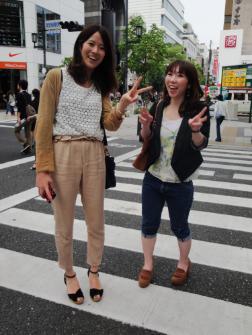
Coming from Salt Lake City, Utah to Osaka, Japan has been quite the experience within the fashion trends. Before coming to Japan I thought the popular fashion trends would be associated more toward a punk look with a lot of black or more of the Harisuku fashion, this is not the case. I have enjoyed learning about the Japanese fashion trends, which incorporate many light colors, ruffles, and bows. I chose to present on Japanese fashion because once I arrived this was the first thing I noticed. I mainly noticed the women very dressed up, almost all wearing skirts or dresses and heels. I immediately fell in love with everything they were wearing. The ruffled socks with high heels paired with a cute skirt, dress, or shorts are right up my alley in the fashion sense.


The fashion in Japan compared to America, Utah specifically, is very different. It is normal to wear jeans and a t-shirt with tennis shoes in Utah whereas I have noticed it is not common to wear these items of clothing in Japan at all. The socks with ruffles worn in Japan are no where to be found in Utah, it is more common to wear shoes, specifically high heels and flats, with no socks or 'no show' socks. The popular tennis shoes in Utah are vans or running shoes for a more casual look, I have noticed Japan's more casual shoe are converse chucks. Although these are a more casual look for Japan, women will still add a more feminine look to them by wearing lacy socks. I have only seen approximately three women in my three weeks staying in Japan who were wearing jeans.


The main colors incorporated within their fashion are more neutral colors such as white and cream with light blues and pinks. The denim skirt and button-up shirts are popular as well.


Another difference I have found within the two countries is the way the students at IBU dress up for their meditation class, which is in a way like their church to them. A black dress suit and a white button-up underneath it is the dress wear for this occasion, whereas the Japanese women usual dress wear would be considered 'dressed up' for an occasion like church.

The kimono is the more traditional style of the Japanese fashion which is used for weddings and for a coming of age celebration, which Hitoma, an IBU student lent to another SLCC student for her presentation about the kimono on the far left.

The fashion magazines here are aimed toward women, which is a universal thing between Japan and America. The Japanese magazines are quite a bit better than the American magazines because they actually come with an item inside of the magazine such as a purse, eyelashes and make-up, or socks. I have bought a few of them to take back to friends. They are one of the many cool traits Japan has.


I found it interesting to interview my new friend Hitomi from Japan because she stated that when she went to New Zealand with her 'host family' as an exchange student they asked her to change because they didn't think she was dressed appropriately to go to dinner in her shorts and knee high socks. She was confused because dressing this way was custom to her in Japan, but it was not custom to her host family, as it is not to me. As I have noticed these knee high stockings and shorts or skirts are seen everywhere in Japan, but in Utah this fashion statement would be looked down upon. Hitomi also stated that she thinks Japan follows the fashion from the US, but I feel as though Japan is ahead of the fashion in the US. She clarified she thinks it comes from bigger cities in California and New York, which makes sense but there is still a major difference in the street fashion in Japan and the US, especially Utah. I am looking forward to going back to Utah with my Japanese clothes and style.

